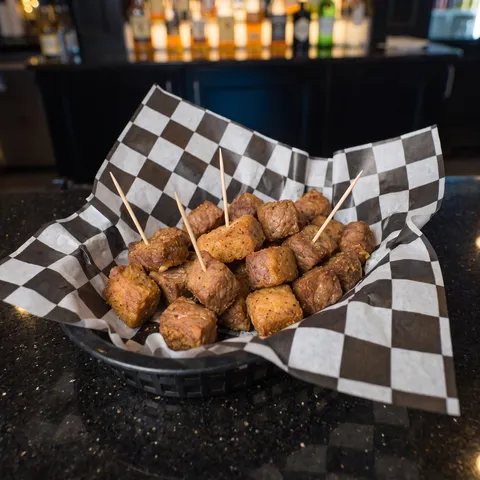
TL;DR: Chislic is South Dakota's signature snack: bite-size cubes of red meat, deep fried or grilled, salted hard, and served with toothpicks. Brought to the prairie by German-Russian immigrants in the 1870s, it became the official state nosh in 2018. At 212 The Boiling Point in Brandon we serve an 8 oz hand cut beef chislic appetizer for $14.79 and a full basket for $17.79.
Order chislic in Brandon and nobody blinks. Order it in Denver and the server calls a manager. That is the fun of South Dakota's favorite bar snack: it is beloved here, unknown almost everywhere else, and it tells a hundred and fifty year story about who settled this prairie and what they brought with them.
At 212 The Boiling Point we cut ours by hand from beef, fry it to a crackling edge, and send it to the table hot enough to earn the restaurant's name. Before you grab a toothpick, here is everything worth knowing about the dish South Dakota made official.
So What Exactly Is Chislic?
Chislic is cubed red meat, usually a half inch to an inch across, cooked hot and fast. Deep frying is the bar standard, grilling is the backyard standard, and either way the cubes come out browned outside and juicy inside. The seasoning is aggressively simple: salt, garlic salt, sometimes a little pepper. The classic accompaniments are saltine crackers and a cold beer.
The dish reads like the prairie itself. No breading, no fuss, no plate presentation to speak of. A pile of hot meat, a cup of toothpicks, and a table of people reaching at the same time. That is the recipe for its survival: chislic is social food, built for bars, race nights, and card games that run late.
Traditionalists will tell you real chislic means mutton or lamb, and in the historic chislic belt around Freeman that is still true. Most bars and grills across the state, ours included, serve beef because that is what the crowd wants. The technique matters more than the cut: small cubes, screaming heat, salt while hot.
The German-Russian Story Behind the Cubes
Chislic came to Dakota Territory in the 1870s with German-Russian immigrants, families who had farmed the Russian steppe for generations before crossing the ocean for prairie homesteads. Food historians trace the word itself to the Turkic shashlik, the skewered meat dish of Central Asia that traveled west along trade routes into the Russian empire and then, in immigrant trunks and memories, to the American plains. The history of chislic usually credits a Crimean immigrant named John Hoellwarth with bringing the recipe to Hutchinson County around 1870.
The dish put down roots exactly where those families did. Freeman, a town of about 1,300 people an hour west of Brandon, still calls itself the chislic capital of the world and throws an annual South Dakota Chislic Festival that draws thousands. Church fundraisers, legion halls, and small town bars kept the tradition alive through generations when nobody outside the state had ever heard the word.
In 2018 the state legislature made it formal, naming chislic the official state nosh of South Dakota. Lawmakers had to invent the category, since no other state had ever declared a nosh. That is about the most South Dakota thing possible: quietly create a new kind of official honor, give it to fried meat cubes, move on.
How 212 Serves It, and What to Order With It
Our kitchen treats chislic with the respect a state dish deserves. We start with beef, cut it by hand, and flash fry it so the outside crisps while the center stays tender. It hits the basket with seasoning still snapping and a dipping sauce on the side. You get two ways to order it in Brandon:
- Chislic appetizer, 8 oz for $14.79. The table starter. Pairs with cheese curds if your crew runs hungry.
- Chislic basket, $17.79. The full meal, 8 oz of hand cut beef chislic with your choice of side. Add sauteed mushrooms and onions for a dollar and thank us later.
What to drink with it is settled law in this state: something cold, ideally from a local tap. What to dip it in is where you get to have opinions. Ranch is the house favorite, hot honey brings sweet heat, and the brave reach for mango habanero from the full 212 menu of 11 signature wing sauces.
If you are working through South Dakota's food canon, the state tourism office keeps a running list of local legends worth a road trip on Travel South Dakota. Chislic sits near the top of every version, next to kuchen and kolaches from the same immigrant kitchens.
How to Eat Chislic Like You Grew Up Here
There is an etiquette to this, unwritten but universal. First, chislic is communal. Ordering a basket for yourself alone at a full table marks you as an out-of-towner faster than your license plate. Second, the toothpick is the utensil. Forks are tolerated, barely. Third, the crackers are not garnish. A cube of hot beef on a saltine with a shake of garlic salt is the complete original experience, and skipping it means missing half the dish.
Veterans will also tell you about temperature strategy. Chislic waits for no one. The cubes are at their peak in the first five minutes, when the crust still snaps and the center still steams. Order it when everyone is at the table, not before, and defend your basket accordingly. A good server times it for you, and ours do.
The last rule is the easiest: pair it with conversation. Chislic arrived on this prairie as festival food, cooked outdoors for weddings and harvest gatherings, and a century and a half later it still tastes best in a loud room full of people you know.
Why a Racing Bar Is the Right Place to Eat It
Chislic was never restaurant food. It is bar food, festival food, grandstand food, the thing you eat standing up while arguing about a photo finish. That makes a racing themed bar and grill five minutes from Huset's Speedway just about its natural habitat. On race weekends our baskets leave the kitchen in convoys, and on trivia nights the toothpick count gets genuinely impressive.
First time trying it? Come hungry, order the appetizer for the table, and watch how fast strangers become friends when the basket lands. A hundred and fifty years of prairie hospitality taught us that trick, and it has not failed yet.
Frequently Asked Questions
What meat is chislic made from?
Traditional chislic uses mutton or lamb, and most modern bars serve beef. At 212 The Boiling Point we cut beef by hand for ours, flash fry it, and season it while it is still crackling.
Is chislic only a South Dakota thing?
Almost entirely. Chislic country covers southeastern South Dakota, with Freeman and Hutchinson County as its historic heart. Ask for chislic two states away and you will get a blank stare.
How is chislic served?
The classic serve is a pile of hot cubes with toothpicks, saltine crackers, and garlic salt. Dipping sauces are a modern upgrade, and ranch or hot honey both earn their spot.
Why did chislic become South Dakota's official state nosh?
In 2018 the state legislature honored the dish's deep German-Russian roots and its place in local bar culture by naming it the official state nosh, a category South Dakota invented for it.
Where can I try chislic near Sioux Falls?
Ten minutes east of Sioux Falls, 212 The Boiling Point in Brandon serves an 8 oz chislic appetizer for $14.79 and a chislic basket with a side for $17.79, cut by hand from beef.
The 212 Crew runs the kitchen, the bar, and the trivia mic at 212 The Boiling Point in Brandon, SD. Between the smokehouse and 650+ Google reviews, they know what the east side likes to eat. Say hi on Facebook.